



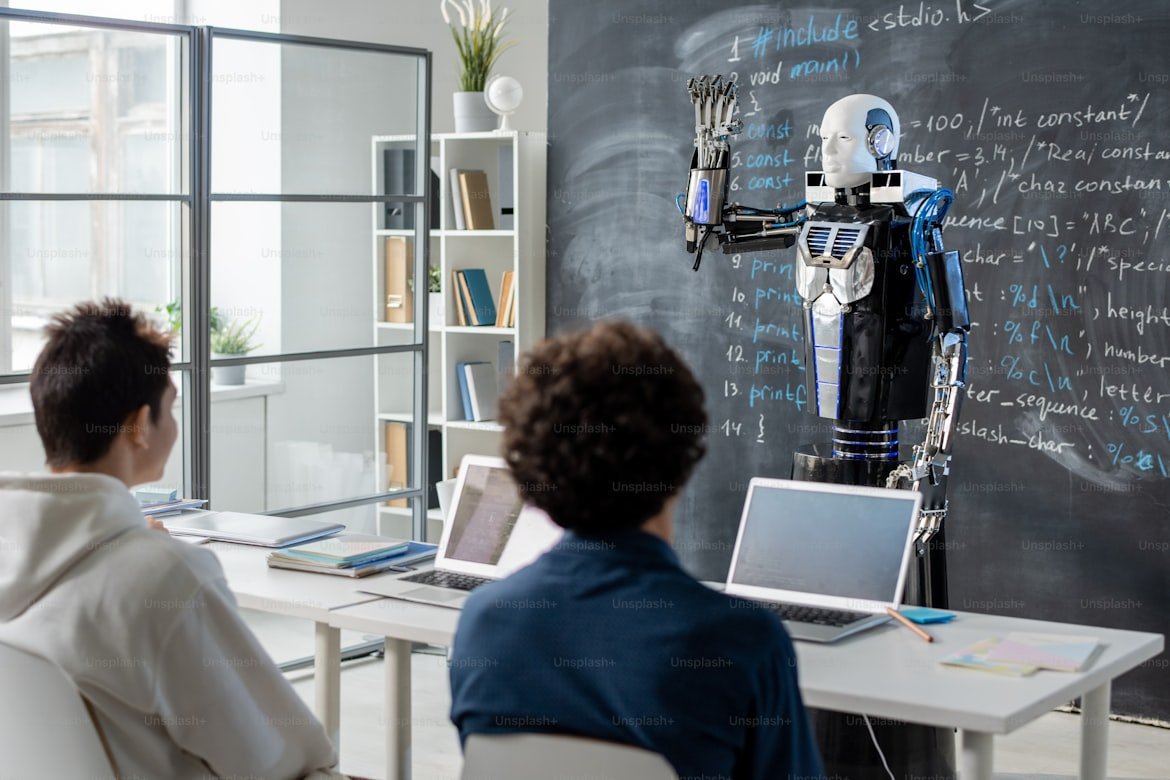
Technology has changed almost every part of our lives, and education is no exception. Smartboards, video lectures, and digital learning apps have made Artificial Intelligence (AI) an active part of the classroom. But an important question remains:
Can AI ever replace human teachers?
The answer is no, not completely. AI can explain lessons, process data, and provide instant feedback. However, teaching is not only about knowledge; it is also about emotional understanding, motivation, and connection. This is where human teachers excel.
The future of education is not AI versus humans, but a combination of both—a hybrid classroom.
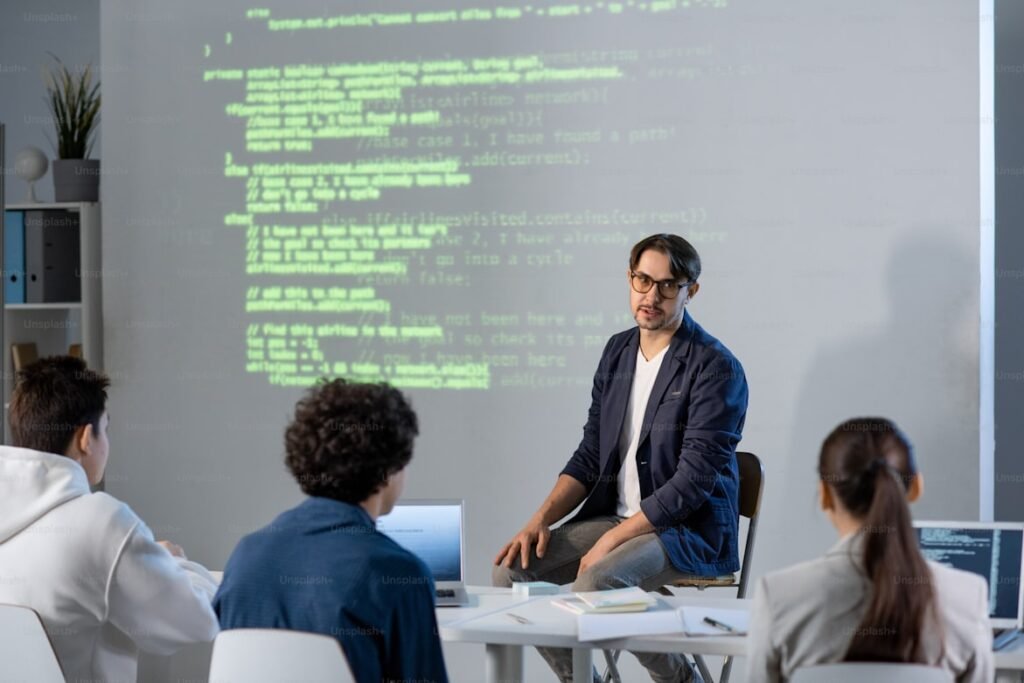
1. What Are AI Teachers?
AI teachers are not physical robots teaching in classrooms. Instead, they are digital systems powered by artificial intelligence that support learning tasks such as:
- Explaining lessons through interactive software
- Checking assignments automatically
- Providing customized learning experiences
- Answering questions instantly
- Tracking student performance and suggesting improvements
Platforms like ChatGPT, Google Gemini, Coursera, and Khan Academy already use AI to analyze learning patterns and provide personalized guidance.
2. Why AI is Growing Rapidly in Classrooms
AI is becoming popular in education because of its unique benefits:
- Personalization: Adjusts lessons to suit each student’s learning speed.
- 24/7 Availability: Students can learn anytime.
- Instant Feedback: No waiting for test corrections.
- Data Insights: Helps teachers identify where students struggle most.
- Efficiency: Automates tasks like grading and attendance.
This allows teachers to focus more on mentoring and guiding students.
3. The Emotional Gap: Where AI is Still Limited
AI can process information, but it cannot feel emotions. Learning is not just about knowledge—it is also emotional.
Human teachers can:
- Recognize when a student is upset or unmotivated
- Encourage students during failures
- Build confidence, trust, and inspiration
- Create a supportive learning environment
AI can simulate responses, but it cannot genuinely care. Emotional connection is the strength of human teaching.
4. Hybrid Classrooms: Combining AI and Human Teachers
The future is a partnership between AI and human teachers.
Here’s how a hybrid classroom works:
- AI handles repetitive lessons, quizzes, and progress tracking.
- Human teachers encourage creativity, communication, and emotional learning.
- AI provides learning insights and performance data.
- Human teachers mentor, support, and guide students.
This combination makes learning efficient, personalized, and emotionally meaningful.
5. Real-Life Use of AI in Education
Examples from across the world:
- India: LEAD School and Byju’s use AI for personalized lessons.
- USA: Carnegie Learning uses AI for math tutoring.
- China: Some schools use AI for tracking student focus.
- Global platforms: Google Classroom and Microsoft Teams integrate AI support tools.
Yet, in all these classrooms, human teachers remain the foundation.
6. Why Emotions Matter in Learning
Students learn better when they feel understood and motivated.
Emotion strengthens focus, memory, and confidence. Teachers who inspire through storytelling, encouragement, and support create meaningful learning experiences—something AI cannot replace.
7. Is Emotional AI Possible?
Researchers are working on AI that can detect emotions using facial expressions and tone. However, even if AI can recognize emotions, it still cannot genuinely feel them. Emotional intelligence remains a uniquely human ability.
8. What Students Gain from Both AI and Human Teachers
| AI Teachers | Human Teachers |
|---|---|
| Always available | Emotionally supportive |
| Personalized lessons | Inspire and motivate |
| Instant feedback | Build trust and confidence |
| Data-driven learning | Creative and value-based learning |
9. Challenges Ahead
- Not all schools have access to AI tools.
- Student data privacy must be protected.
- Teachers need training to use AI effectively.
- Overuse of AI could reduce creativity and communication skills.
10. Conclusion: A Balanced Future
The future of education is collaboration.
AI provides efficiency, accuracy, and personalization.
Human teachers provide empathy, connection, and inspiration.
One teaches the mind. The other touches the heart.
The classroom of the future will be a blend of both—smart, supportive, and emotionally connected.